


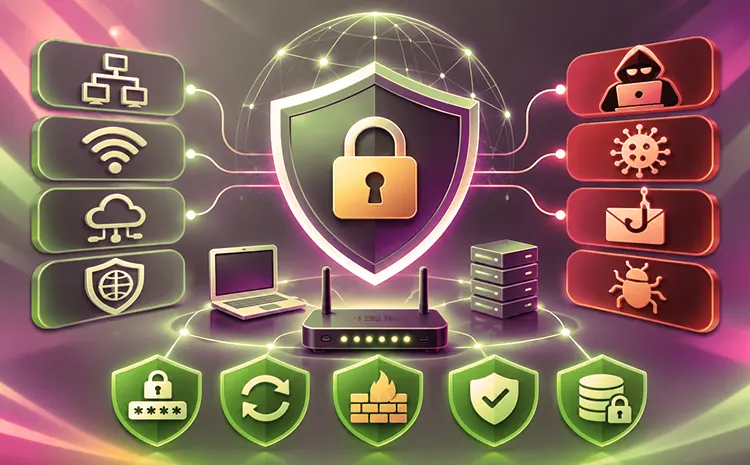
Companies use computer networks to communicate to each other, share info, and get work done. But these networks can be vulnerable to cyber attacks like viruses, fake emails, and hackers. That’s where network security comes in—it helps keep business networks and important data safe from these threats. To make their IT systems more secure, businesses need to know how network security works, what kind of risks it can prevent, and what tools are available to them. By doing so, they can protect themselves from cyber threats and create a safer online environment.
What Is Network Security?
In information technology, network security describes the protection of a computer network and the data it contains. It encompasses measures and technologies for safeguarding these networks. Therefore, it is part of IT security and a sub-discipline of cybersecurity.
Cybersecurity, IT security, and network security have different focuses, but they overlap:
- Network security deals with the security of data transmissions and the network infrastructure.
- IT security encompasses the protection of all information technology systems.
- Cybersecurity focuses on protecting systems, networks, and data from digital attacks.
Modern network security also incorporates the Zero Trust security model, which requires continuous verification of users, devices, and access permissions before granting access to network resources.
Common Network Security Threats
DDoS Attacks
DDoS (Distributed Denial of Service) is a cyberattack that aims to overwhelm a network, server, or service with excessive traffic or requests, making it unavailable to legitimate users.
Malware
Malware: Malware encompasses various forms of malicious software. These include, for example, computer viruses, Trojans, spyware, and ransomware.
Insider Threats
Insider threats: Besides criminally motivated acts, human error can also cause security incidents. For example, the unauthorized transfer of data to insecure locations. Intentional acts are also possible.
Network Vulnerabilities and Phishing Attacks
Vulnerabilities: Cybercriminals can infiltrate computer networks through vulnerabilities that are not adequately protected. Human error also plays a role: If, for example, a phishing attack goes undetected, it can allow hackers access to a network.
Benefits of Network Security for Businesses
The advantages of a well-secured corporate network are evident in the increasing number of cyberattacks and the resulting damage. Cyberattacks can cause financial losses, disrupt business operations, and compromise sensitive information. Well-secured networks are more difficult to infiltrate, limiting the damage from cyberattacks—or preventing it entirely.
Reliability and Business Continuity
Your network maintains its functionality and consistently delivers high performance. Network interruptions can be less frequent and shorter, resulting in reduced downtime and therefore lower financial losses for your company in the event of technical difficulties or a cyberattack.
Data Protection and Regulatory Compliance
A well-secured network contributes to compliance with applicable data protection laws such as the General Data Protection Regulation (GDPR). The network also protects customer data and company secrets stored within it.
Customer Trust and Business Reputation
A data breach—that is, data theft or misuse—can have legal consequences. Above all, however, such an incident can damage a company’s image and undermine customer trust.
Network Security Across the Seven OSI Layers
Networks can be described using seven layers, as defined in the OSI model. Data generally passes through these layers as it travels from one device to another. Therefore, a good network security concept implements mechanisms, applications, and protocols at different layers to secure data connections.
These mechanisms check, for example, various elements of the data packets sent through the network. Each time, a decision is made whether the data traffic should be forwarded or blocked.
Since no single security tool monitors all layers of a network, you should opt for a multi-component solution or assemble your own custom solution from compatible security measures. If you lack the necessary expertise in-house, it is advisable to seek external consulting.
Network Security Measures, Tools, and Applications
To protect your network, you should take measures to meet the three classic IT security goals: confidentiality, integrity, and availability. Implement security mechanisms and controls in your network. You can use the following tools, among others:
| Security tool | Main function |
| Firewall | Monitors and filters incoming and outgoing network traffic. |
| Proxy firewall | Filters application-layer traffic and provides application-level security. |
| IAM | Manages user identities and access permissions. |
| VPN | Provides secure connections over public or untrusted networks. |
| 2FA | Adds an extra authentication step to protect user accounts. |
| DDoS protection | Helps prevent service disruptions caused by excessive malicious traffic. |
| IDS/IPS | Detects suspicious network activity and, in the case of IPS, blocks it. |
| DLP | Helps prevent unauthorized data transfers. |
| Encryption | Protects data from unauthorized viewing. |
Firewalls and Proxy Firewalls
Firewalls are a classic tool for increasing network security. Depending on their type, they can operate at different layers of the OSI model and check various elements of data packets.
Proxy firewalls operate at layer 7 of the OSI model, the application layer. They can analyze application-layer data traffic, including data decrypted at this layer, and provide application-level filtering.
Access Control, IAM, DRM, VPNs, and Two-Factor Authentication
You implement access controls using Identity and Access Management (IAM) tools. Digital Rights Management (DRM) tools can also restrict access to and use of digital content. Virtual Private Networks (VPNs) provide secure network connections and can support access control. Additionally, you should implement user authentication—two-factor authentication (2FA), as a supplement to traditional passwords, is a well-known example.
DDoS Protection
DDoS protection helps protect your network, servers, and websites from harmful traffic and reduces the risk of crashes and outages.
Intrusion Detection and Prevention Systems (IDS/IPS)
Intrusion Detection and Prevention Systems (IDS/IPS) monitor network traffic and report (IDS) or stop (IPS) suspicious activities.
Data Loss Prevention (DLP)
Data Loss Prevention (DLP) helps prevent data from leaving the network without authorization. While firewalls and DDoS protection help protect against malicious traffic entering the network, DLP focuses on preventing unauthorized data transfers.
Network Encryption
Encryption helps ensure that data remains private and is not easily viewed. A well-known protocol for this is TLS, which encrypts data transmitted between systems on the web and elsewhere.
Network Security Solutions: SASE, SSE, and SD-WAN
For each of the applications mentioned above, there are multiple offerings from various manufacturers. Keeping track of these and checking the compatibility of the individual solutions with each other can be challenging in order to assemble a comprehensive network security package for your company. Often, it is advisable to opt for solutions that bundle various tools and are designed to work together. Examples include
Secure Access Service Edge (SASE)
Secure Access Service Edge (SASE) is a modern concept encompassing network security services and Wide Area Network (WAN) functionalities. These offerings are typically cloud-delivered and simplify network management while simultaneously enhancing security.
Security Service Edge (SSE)
Security Service Edge (SSE) bundles the security applications included in SASE but excludes the WAN functions.
Software-Defined Wide Area Network (SD-WAN)
Software-Defined Wide Area Network (SD-WAN) is a modern solution for site-to-site connectivity. These software-based wide area networks can integrate with network security functions, which also play an important role in the SASE concept.
Conclusion
In today’s digital age, keeping your business safe from cyber threats is crucial. You need to protect your network, sensitive info, and daily operations from hackers. To do so, you can use things like firewalls, encryption, and access controls to keep the bad guys out. There are also other solutions like SASE, SSE, and SD-WAN that can help you manage your network and keep it secure. Having a good plan in place can help you safeguard your digital assets, keep your business running smoothly, and build trust with your customers. This way, you can reduce the risks and keep your business safe from cyber threats.